Pass the LLQP in 4–8 Weeks While Working Full-Time in Canada
Pass the LLQP in 4–8 Weeks While Working Full-Time in Canada ! Candidate scheduling LLQP study time before work Yes, you can study for and pass the LLQP while working a full-time job.

Pass the LLQP in 4–8 Weeks While Working Full-Time in Canada
Yes, you can study for and pass the LLQP while working a full-time job. Most disciplined candidates finish in 4 to 8 weeks using scheduled evening and weekend study blocks. The national first-time pass rate for LLQP modules ranged from 69% to 78% in 2024, which tells you the exam is beatable but not a guaranteed pass without real preparation. Before booking anything, you still need to finish an approved pre-licensing course and register for your CIPR number.
TL;DR:
- Most candidates can complete the LLQP study in 4 to 8 weeks by studying 3 to 10 hours weekly, depending on their schedule and capacity.
- Building a study plan aligned with your available hours minimizes burnout and ensures comprehensive coverage of modules, especially the more complex ones.
- Mock exams should be booked only after covering all modules at least once, with a second closer to the test date to confirm passing readiness.
- You must complete an approved pre-licensing course, register with the CIPR, and schedule your exam at least a week after your course completion.
- Active recall and spaced repetition techniques, combined with practice quizzes and short study sessions, maximize limited study time around a full-time job.
Table of Contents
- Building an LLQP while working study schedule that actually holds up
- Prerequisites, CIPR registration and booking your exam
- Study techniques that fit around a full-time job
- What to expect on exam day, and the rewrite rules if you don’t pass
- How LLQP Guide supports candidates studying around a job
- After you pass: what comes next
- Where to go next if you’re ready to start studying
- Sources
- FAQ
Building an LLQP while working study schedule that actually holds up
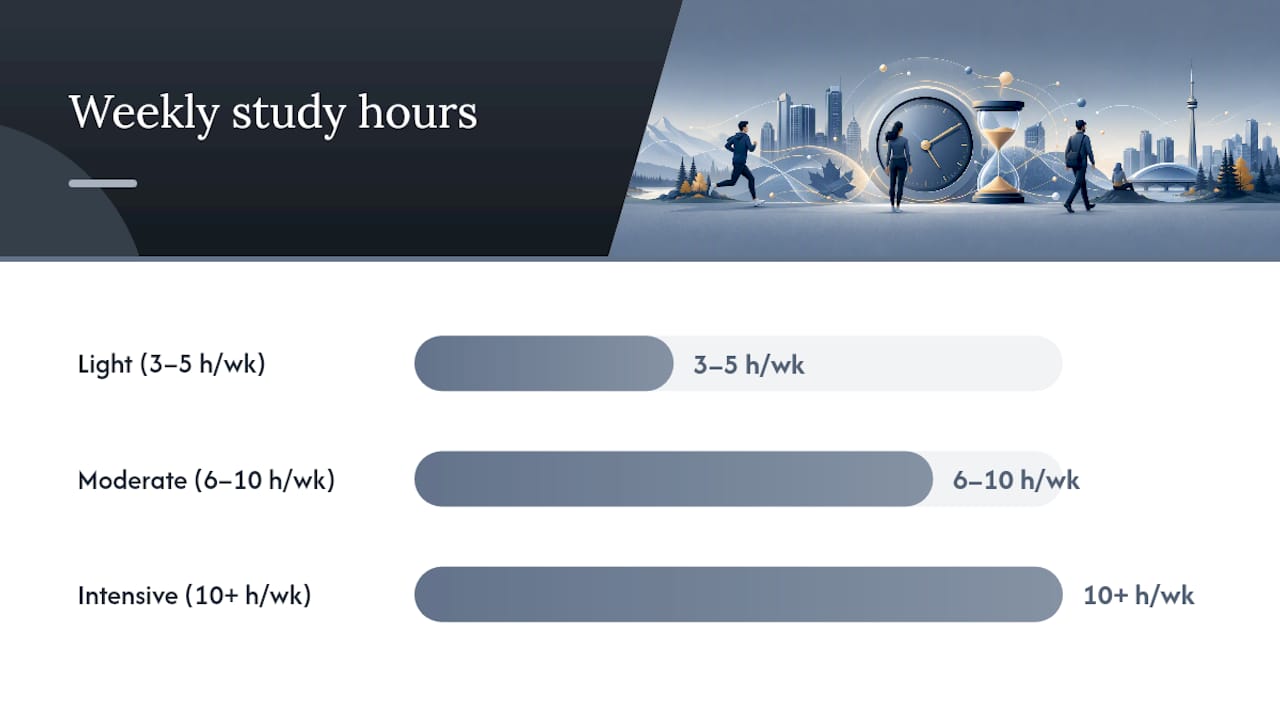
The right schedule depends on how many hours you can realistically protect each week, not how many you wish you had. Most candidates fall into one of three tiers, and picking the wrong one is the fastest route to burnout or a wasted exam fee.
- Light schedule (3 to 5 hours a week, 7 to 8 weeks): Two 45 minute weekday sessions plus one 90 minute weekend block. Spend weeks one through five on lessons and quizzes, module by module, and save the last two weeks entirely for mock exams and review.
- Moderate schedule (6 to 10 hours a week, 5 to 6 weeks): Four 45 to 60 minute sessions during the week, plus a longer Saturday or Sunday block. Rotate through Life Insurance, Accident & Sickness, Segregated Funds & Annuities, and Ethics on a weekly cycle, running a full mock exam every second weekend.
- Intensive schedule (10+ hours a week, 4 weeks): Daily 45 to 60 minute sessions plus two weekend blocks. This pace suits candidates who can shift some vacation days or reduced hours around exam week.
Split the four modules so the heaviest ones (Life Insurance and Ethics tend to carry the most nuance) get more repetitions early, not crammed at the end. Book your first full-length mock exam once you have covered every module at least once, then run a second closer to your test date to confirm you are consistently clearing the pass mark.
Book your actual exam date about a week after your final mock, once your course certificate is issued. Certificates and CIPR clearance typically need a few business days to process before a provincial exam sitting will accept your booking.
Pro Tip: Treat your calendar like a client meeting you can’t reschedule. Block study time in your work calendar as “busy,” not “study” — fewer coworkers will try to book over it.
Prerequisites, CIPR registration and booking your exam
You cannot skip straight to the exam. Every candidate needs the same three pieces in place first.
- Complete a pre-licensing course through a provincially accredited provider before you’re eligible to register for exams.
- Register with the Canadian Insurance Participant Registry (CIPR) to get the CIPR number that provincial exam providers require for booking.
- Book your exam sitting online or at a test centre, depending on your province. Some regions, including British Columbia, offer bundled full-day packages covering multiple modules.
- Watch rescheduling deadlines closely. Provincial examinee information guides set specific cutoffs, and missing one usually means forfeiting your fee.
- If you fail a module, rewrite rules and waiting periods vary by province, so check your local guide before assuming you can retake next week.
If you’re writing in Ontario, the process runs through the same CIPR requirement but with its own provider list and booking portal, so don’t assume BC’s rules transfer directly.
Study techniques that fit around a full-time job
You don’t need more hours. You need better use of the hours you already have. Active recall (quizzing yourself instead of re-reading notes) and spaced repetition (revisiting the same weak topics a few days apart) both work well in short 20 to 45 minute windows, which is exactly the shape of a lunch break or a transit commute.
- Use mock exams to find your weak clusters, then drill only those topics rather than re-reading entire lessons. This is the single highest-return move you can make with limited hours.
- Reserve weekends for your longest, uninterrupted practice blocks. Weekday sessions are for maintenance; weekends are for the heavy lifting.
- Mix formats to avoid fatigue: short video or podcast lessons for the commute, flashcards for five-minute gaps, and full quizzes when you have a real desk and 30 minutes.
- If you’re studying in a second language, lean on translation tools built into your study platform rather than switching between two separate resources.
- Ask your manager about a small, informal allowance, like starting 20 minutes late once a week to finish a study session. Many employers will grant this quietly if you ask directly rather than assuming it’s off the table.
Pro Tip: After every mock exam, spend more time reviewing why you got a question wrong than celebrating the ones you got right. That’s where the actual score gain hides.
What to expect on exam day, and the rewrite rules if you don’t pass
Each module runs about 75 minutes and covers 20 to 30 multiple-choice questions, with a pass mark generally set at 60%. Knowing the format ahead of time removes a lot of the day-of anxiety.
- Bring government-issued photo ID and arrive early, or if you’re writing online, test your camera and internet connection the night before, not the morning of.
- Give your employer a short heads-up if your exam falls during a workday. A one-line note like “I have a licensing exam booked for [date], can I take the morning?” is usually enough.
- Reschedule requests have firm deadlines set by your province, and missing the deadline usually means losing your exam fee.
- If you don’t pass, rewrite policies include waiting periods that differ by province, so check your provincial guide before planning a second attempt around your work schedule.
Your course certificate and passing marks are usually only valid for licensing purposes for about 12 months, so don’t let a passed exam sit unused for a year while you sort out sponsorship.
How LLQP Guide supports candidates studying around a job
Studying in short bursts only works if your material is built for short bursts. LLQP Guide structures its Life Insurance module and the other three LLQP subjects into lessons short enough for a coffee break, backed by:
- Unlimited practice quizzes for repeated drilling on weak topics
- Full-length mock exams that mirror real test-day timing and question count
- Readiness tracking so you know which module needs another pass before test day
- Built-in translation tools across 11-plus languages for ESL candidates
- Video and podcast formats for commute-friendly studying
Every module page, including British Columbia’s-specific breakdown, lays out exactly what’s covered before you commit any study hours to it.
After you pass: what comes next
Passing the LLQP isn’t the finish line. It opens the door to sponsor onboarding, licence applications, and, eventually, commission-based work that runs on your own schedule. Studying while employed is common precedent for that shift: if you can protect study blocks around a job now, you can protect client time later.
— Reza
Where to go next if you’re ready to start studying
Trying to build a study plan from scratch, on top of a full workload, is where most candidates lose momentum before they lose the exam. LLQP Guide gives working candidates a structured alternative: province-specific lessons, unlimited quizzes, and full mock exams built into one subscription, so you’re not stitching together three different resources during your lunch break. Start with a free trial to see if the format fits your schedule, then move to a paid plan once you know which modules need the most attention.
Check the pricing page for plan options, or browse all four LLQP modules to see exactly what’s covered before your trial runs out. If you’re writing in Ontario, the province-specific breakdown shows you what to expect before you book your exam date.
Sources
- LLQP first-time pass rates in 2024 released - Investment Executive
- LLQP exam information and registration - Insurance Council of British Columbia
- Licensing requirements - Life Licence Qualification Program - Financial and Consumer Services Commission (New Brunswick)
Recommended
Frequently asked questions
Is the LLQP hard to pass?
It's manageable with structured study, but not automatic. National first-time pass rates ranged from 69% to 78% across modules in 2024, meaning a meaningful share of first-time writers still don't clear the 60% pass mark.
How many times can you take the LLQP exam?
You can rewrite a failed module, but provincial rules set waiting periods and, in some cases, limits on repeated attempts, so check your provincial examinee guide before assuming an immediate retake is possible.
Can you use your life insurance while alive in Canada?
Yes, depending on the policy type. Permanent life insurance policies with cash value, and certain policies with living benefits riders, can allow you to access funds while you're still alive, though this falls outside LLQP exam content and depends entirely on the specific policy contract.
How much money can you make selling life insurance in Canada?
Income varies widely by province, agency structure, and commission model, since most advisors earn through commission rather than salary. There's no single figure that applies across the industry, so realistic income expectations depend heavily on your book of business and the products you're licensed to sell.
Do I need to finish a course before booking the LLQP exam?
Yes. You must complete a course through a provincially accredited provider and hold a valid CIPR number before any provincial exam board will let you book a sitting.