Lose Your Licence in Canada: LLQP, Insurance Fraud and Regulator Action
Lose Your Licence in Canada: LLQP, Insurance Fraud and Regulator Action ! Investigator examining secured exam evidence Cheating on the LLQP exam and committing insurance fraud are treated as the same category of problem by Canadian regulators: both signal a candidate isn't fit to hold a licence.

Lose Your Licence in Canada: LLQP, Insurance Fraud and Regulator Action
Cheating on the LLQP exam and committing insurance fraud are treated as the same category of problem by Canadian regulators: both signal a candidate isn’t fit to hold a licence. FSRA has said plainly it will not license anyone caught cheating on the exam, and provincial bodies like the Insurance Council of BC and the national coordinating body CISRO back that stance with formal misconduct policies. For a candidate, the immediate stakes are a zeroed exam, a permanent notation on file, a suspension, or a refused licence.
TL;DR:
- Cheating incidents such as using unauthorized materials or having someone else proctor you can lead to immediate exam termination and a permanent misconduct notation.
- Regulators collect evidence through video recordings, system logs, and incident reports, then respond swiftly with formal investigations often within days.
- Confirmed misconduct can result in a range of penalties from zeroed exam scores to license refusal and potential suspension, especially if multiple flags or high-risk violations occur.
- Preparing thoroughly and following exam rules prevents most misconduct allegations, which are usually caused by carelessness rather than malicious intent.
- Responding calmly and providing clear evidence within tight deadlines improves chances of minimizing penalties if falsely accused of misconduct.
Table of Contents
- What counts as insurance fraud LLQP candidates need to recognize
- How regulators catch exam misconduct and investigate it
- What happens after confirmed misconduct or fraud
- Why the Ethics module is really a preview of your career
- A practical checklist to avoid an accusation you didn’t earn
- If you’re accused of misconduct, respond in this order
- The long view on ethics and career risk
- Practise the exam behaviours that keep you clear of trouble
- Where to verify this directly
- Sources
- FAQ
What counts as insurance fraud LLQP candidates need to recognize
The Ethics & Professional Practice module doesn’t treat “cheating” as one vague category. It draws a line between an honest mistake, a misrepresentation, and outright fraud, and that distinction shows up constantly in exam scenarios and in real client files.
On the exam itself, misconduct includes:
- Looking away from the screen repeatedly or toward notes outside camera view
- Having another person in the room or visible on camera during a virtual sitting
- Obstructing or covering the webcam
- Using unauthorized materials, including phones, second screens, or printed notes
In practice, the fraud examples are more consequential and carry real financial harm:
- Forging a client’s signature or altering a signed form after the fact
- Misrepresenting a client’s health history or risk profile to secure approval
- Backdating an application or policy document
- Misappropriating premium payments instead of remitting them
- Churning policies to generate repeat commissions, or offering illegal rebates to close a sale
CISRO’s published curriculum treats these as distinct competencies, not interchangeable sins, because the standard of intent differs for each.
How regulators catch exam misconduct and investigate it
Virtual proctoring isn’t a passive camera feed. Third-party exam administrators watch for specific behavioural cues: eyes drifting off-screen on a pattern, a second voice in the room, a webcam angle that conveniently blocks part of the desk. In-person exam centres rely on staff walking the room and confiscating any unauthorized device before the exam starts.
Evidence a regulator can use includes:
- Recorded video and timestamped screenshots from the exam session
- Written proctor incident reports
- System logs showing keystroke timing or window switching
- Pattern analysis across multiple exam attempts for the same candidate
Investigation timelines are short. The Insurance Council of BC’s misconduct policy describes evidence being compiled into a formal report within days of a flagged incident, followed by a notification to the candidate and a fixed window to respond in writing before adjudication.
FSRA has gone further than passive monitoring in at least one case, requiring a targeted group of candidates to write exams in person after virtual integrity concerns surfaced for that provider. That pilot is a signal regulators will adjust exam delivery, not just penalize individuals, when a pattern of concern shows up.
What happens after confirmed misconduct or fraud
Penalties scale with severity, and they compound if a candidate has more than one flagged incident. Based on the Insurance Council of BC’s published framework, the range looks like this:
- Exam terminated on the spot when a proctor observes clear misconduct mid-session.
- Zero recorded on the affected module, even if only part of the exam was compromised.
- A notation added to the candidate’s file, visible to other provincial regulators reviewing future applications.
- A required in-person rewrite, removing the option to test virtually again.
- Suspension from writing any LLQP exam, which can be for an extended period depending on the severity of the misconduct.
- Licence refusal or revocation for the most serious or repeated violations.
A single low-risk flag, like briefly checking a phone notification, rarely ends a career. But cumulative misconduct across modules, or one high-risk incident like a proxy test-taker, pushes a case toward the suspension end of that scale fast. CISRO’s role here is coordination: because provinces share exam infrastructure and increasingly align policy, a notation in one province follows a candidate almost everywhere else in Canada. New Brunswick’s FCNB, for example, adopted a modernized exam administration policy that mirrors this national direction, including longer wait periods after multiple unsuccessful attempts.
Why the Ethics module is really a preview of your career
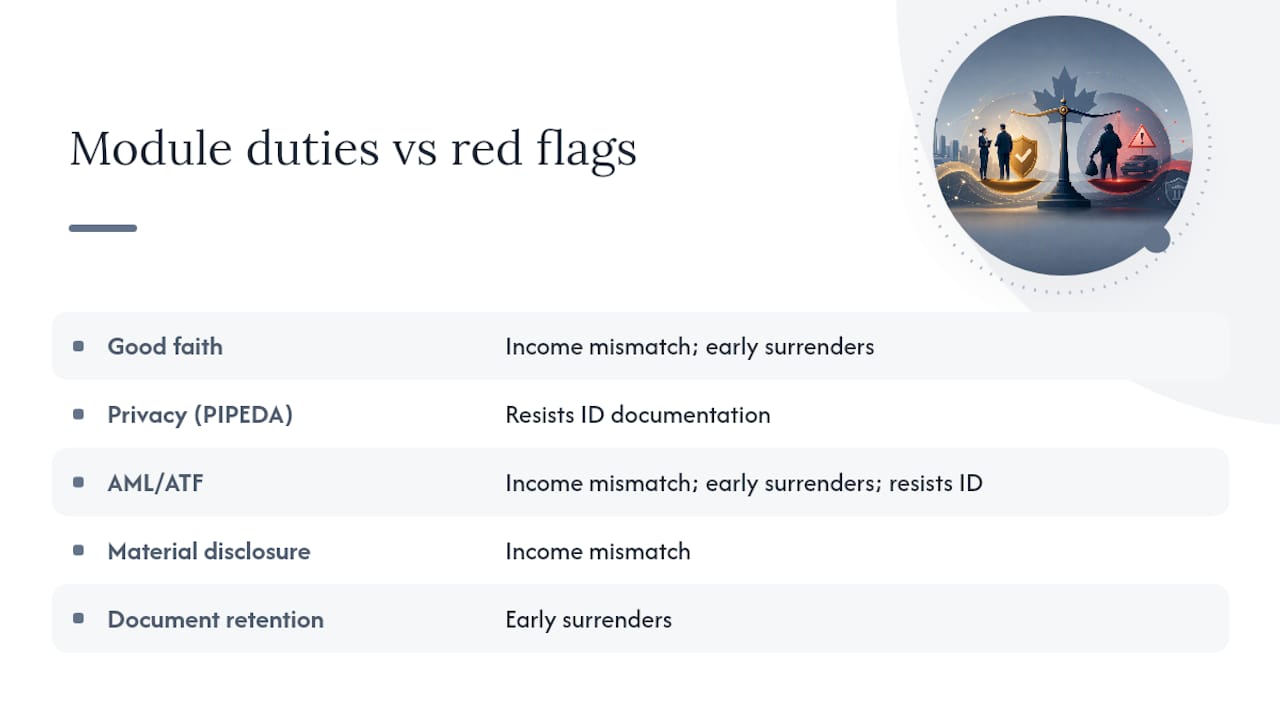
The Ethics & Professional Practice module isn’t a box to check before the “real” content. It’s built around the exact judgment calls that separate a compliant advisor from one who ends up in front of a regulator. The core competencies include the duty to act in good faith, privacy obligations under PIPEDA, anti-money laundering and anti-terrorist financing (AML/ATF) red flags, the duty to disclose material information, and document retention rules.
AML/ATF indicators show up constantly in scenario-based questions: a premium payment wildly inconsistent with a client’s stated income, an early policy surrender pattern that looks like it’s designed to launder funds, or a client who resists any request for identifying documentation. These aren’t abstract test topics. They’re the same red flags a licensed advisor is expected to spot on the job, which is exactly why CISRO’s sample exam questions lean so heavily on realistic client interactions rather than textbook definitions. Candidates studying the Ethics & Professional Practice module closely tend to find the licensing exam and real client files test the same instincts.
A practical checklist to avoid an accusation you didn’t earn
Most misconduct flags aren’t malicious. They’re careless setups that look suspicious to a proctor watching a camera feed all day. A little preparation removes almost all of that risk.
Before the exam:
- Confirm exactly which materials and formats your province allows for that sitting
- Clear a single, plain test area with nothing on the walls or desk
- Have government ID and any required documents ready before login
- Turn off or remove every other device from the room, including smartwatches
- Read the proctor’s pre-exam instructions fully rather than skimming them
During the exam:
- Keep your eyes on the screen and avoid long pauses looking away
- Make sure no one else enters the room or is audible in the background
- Never photograph, screenshot, or record exam content
- Follow every proctor instruction immediately, even if it feels redundant
After licensing, in practice:
- Document client files accurately and completely, every time
- Verify client identity properly rather than rushing the step
- Never backdate or alter a signed form, even to “fix” a harmless error
- Report suspicious transactions rather than assuming someone else will
Pro Tip: Treat your exam test area the same way you’d treat a client meeting room: nothing on the desk that shouldn’t be there, and no interruptions you can’t control. Proctors flag ambiguity, not just violations, so removing ambiguity protects you even when you’ve done nothing wrong.
If you’re accused of misconduct, respond in this order
Getting a misconduct notice is stressful, but the process rewards a calm, documented response over a panicked one.
- Read the notice carefully and note every deadline. Regulators give a fixed window, often just days, to submit a written response.
- Preserve your own evidence immediately. Save system logs, screenshots of your exam environment, and any emails from the proctor or exam provider. Do not attempt to contact other candidates or witnesses about the incident.
- Submit a clear, factual written response within the deadline. If you genuinely need more time, request an extension in writing rather than missing the date, and consider getting compliance or legal advice if the allegation involves fraud rather than a simple exam rule violation.
The long view on ethics and career risk
Most candidates study the Ethics module to pass a section, not to build a habit. That’s backwards. The judgment tested on exam day, spotting a red flag, disclosing what needs disclosing, resisting a shortcut under pressure, is the same judgment that keeps a licence intact ten years later. Shortcuts on exam day rarely feel like fraud in the moment. They just feel like relief. Treat the preparation as real practice, not a hurdle, and the exam stops feeling like a threat.
— Reza
Practise the exam behaviours that keep you clear of trouble
Most misconduct flags come from candidates who didn’t know the rules cold, not from people trying to cheat. A preparation platform closes that gap with full-length mock exams that replicate real proctoring conditions, so you know exactly what’s expected before you’re sitting in front of a live camera feed with the clock running.
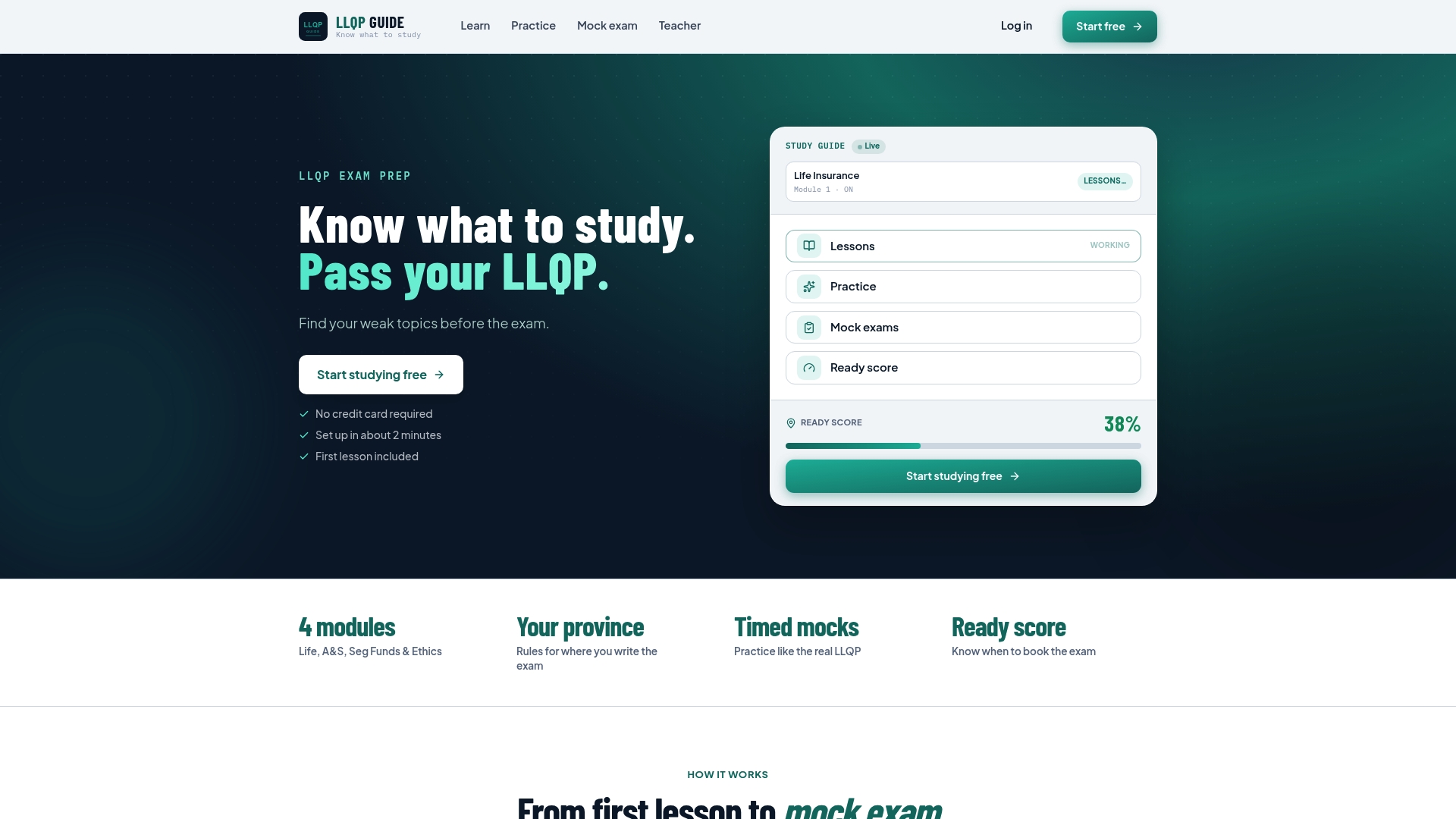
The platform pairs unlimited practice quizzes with dedicated Ethics & Professional Practice module content covering misrepresentation, AML/ATF red flags, and disclosure duties, the exact scenarios regulators build misconduct cases around. In-lesson translation tools in multiple languages help non-native English speakers understand proctor instructions and exam wording. Run a full mock exam under real-like conditions before test day, and check the pricing page to unlock every module, including Ethics, Life Insurance, Accident & Sickness, and Segregated Funds & Annuities.
Where to verify this directly
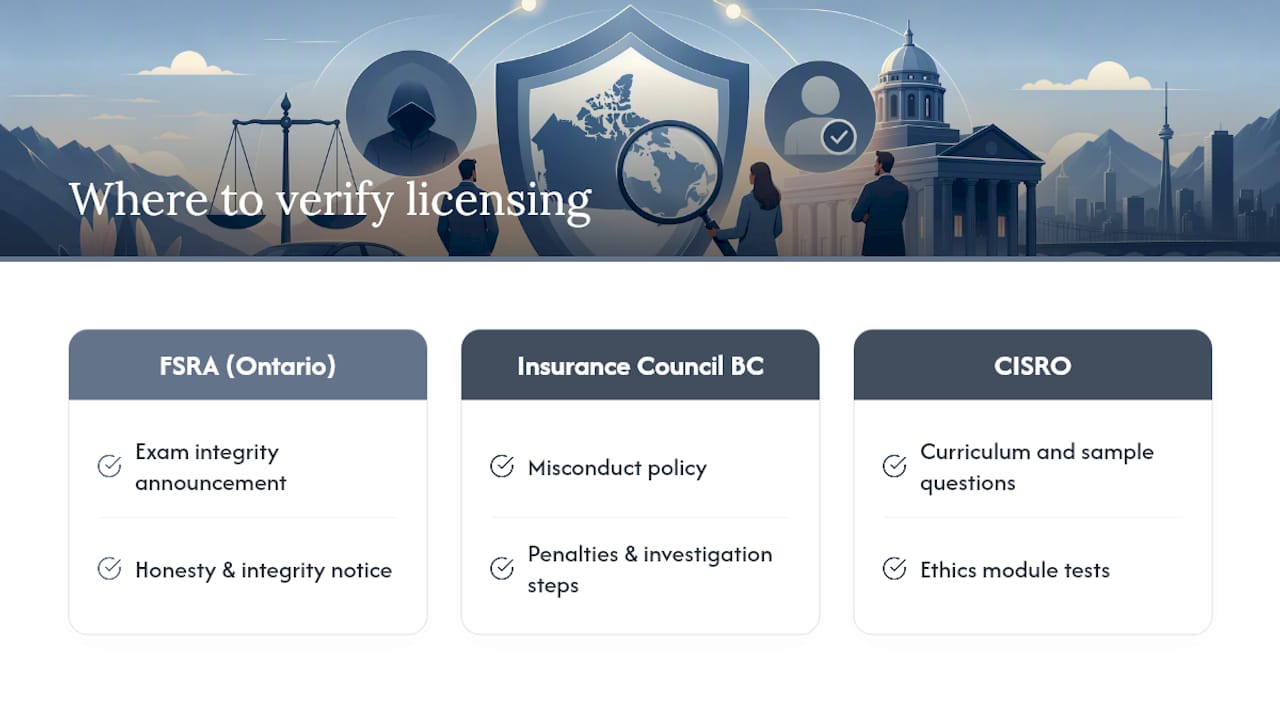
For anything involving your own licensing status, go to the source rather than a summary. FSRA’s exam integrity announcement and its honesty and integrity notice cover Ontario specifically. The Insurance Council of BC’s misconduct policy is the most detailed public breakdown of penalties and investigation steps, and CISRO’s curriculum and sample questions show exactly what the Ethics module tests.
Sources
- LLQP Examination Rules, Misconduct and Investigation Policy | Insurance Council of British Columbia
- Protecting the integrity of exams for Life Insurance agents | Financial Services Regulatory Authority of Ontario
- Curriculum & sample exam questions | Canadian Insurance Services Regulatory Organizations (CISRO)
Recommended
Frequently asked questions
How hard is the LLQP exam?
The exam is challenging because it tests applied judgment across four modules, not memorization, and the Ethics & Professional Practice component specifically tests how you'd handle grey-area client situations rather than simple recall.
Is the LLQP licence worth it?
For anyone planning a career selling life, accident and sickness, or segregated fund products in Canada, the licence is a legal requirement, not an optional credential, so the real question is how well you prepare rather than whether it's worth pursuing.
How many attempts are allowed for the LLQP exam?
Rules on rewrites and waiting periods vary by province and by how many prior attempts a candidate has had, with longer waits kicking in after repeated unsuccessful sittings; check your province's specific waiting period rules before booking a retake.
How much does it cost to get an LLQP licence in Ontario?
Costs vary by course provider and exam fees set by the province, and they're separate from any study platform subscription, so confirm current figures directly with your provider and FSRA rather than relying on outdated estimates.
What happens if I'm flagged for exam misconduct?
You'll receive a written notice describing the allegation, get a limited window to respond in writing with your own evidence, and face an adjudication that can range from a warning to licence refusal depending on severity, as outlined in the Insurance Council of BC's policy.