Par vs non par: what Canadian LLQP candidates need to know
Par vs non par: what Canadian LLQP candidates need to know ! Hands holding blank life insurance policy folder Participating (par) policies let you share in the insurer's surplus through dividends, but those dividends are never guaranteed and the premiums run higher.

Par vs non par: what Canadian LLQP candidates need to know
Participating (par) policies let you share in the insurer’s surplus through dividends, but those dividends are never guaranteed and the premiums run higher. Non-participating (non-par) policies skip the dividend upside entirely in exchange for fixed premiums and guaranteed values you can predict on day one. For most Canadians, and for every LLQP candidate who gets tested on this, the real question isn’t which product is “better.” It’s whether you value long-term growth potential enough to pay more for it and accept some uncertainty.
TL;DR:
- Dividends from participating policies depend on investment returns and are not guaranteed, making par premiums higher and more volatile over time.
- Non-participating policies offer fixed premiums and guaranteed values, making them suitable for clients prioritizing certainty and short-term needs.
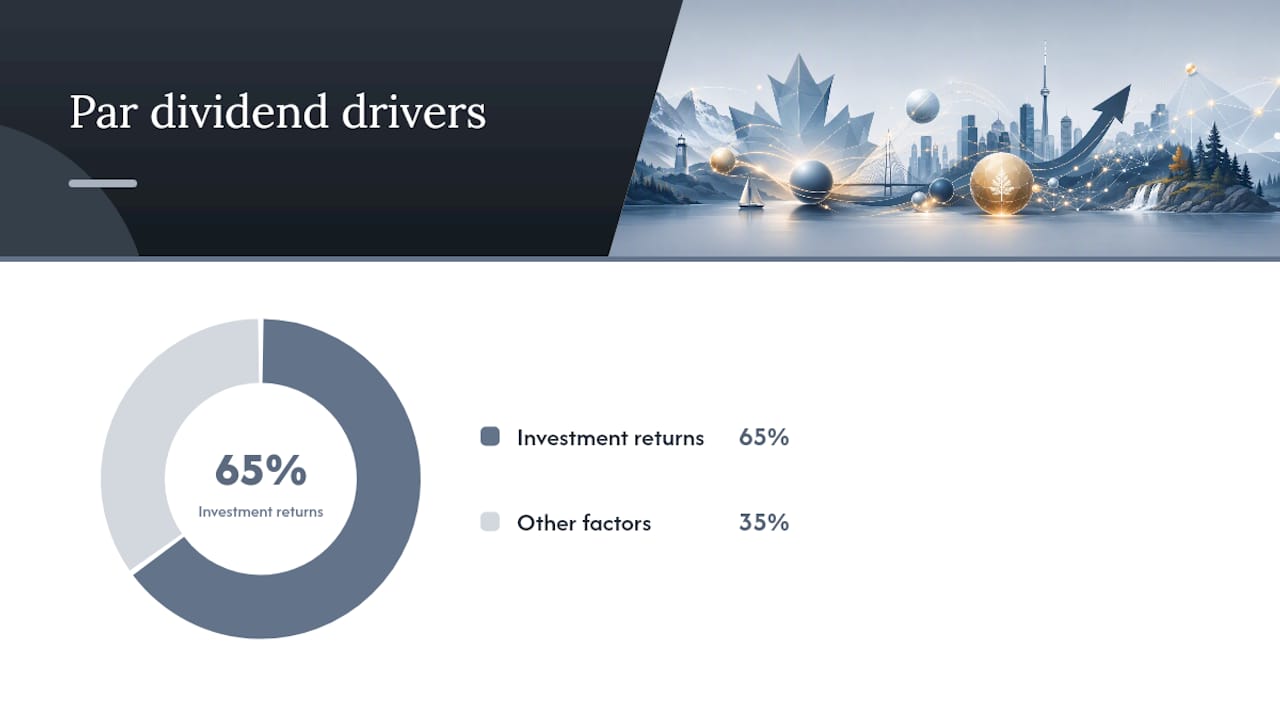
- Insurers smooth dividend scale fluctuations over multiple years, with investment performance contributing about 60 to 70 percent to dividend payouts.
- Comparing par and non-par requires examining dividend history, guaranteed versus projected values, and how early surrender costs might differ across insurers.
- Candidates should understand that dividend scales are projections, not guarantees, and focus on the guaranteed policy features when making or explaining choices.
Table of Contents
- Par vs non-par: the baseline definitions you need to know
- How par dividends actually get calculated
- Weighing the pros, cons, and who each policy suits
- How to compare par and non-par quotes properly
- Where LLQP candidates trip up on this topic
- Why this distinction matters more than most candidates realize
- Practise par vs non-par scenarios until they’re second nature
- Sources
- FAQ
Par vs non-par: the baseline definitions you need to know
A participating (par) whole life policy gives the policyholder a stake in the insurer’s participating account, a pooled fund that holds premiums from every par policyholder. When that account performs well, the insurer may declare a dividend and pay it out to policyholders. When it underperforms, the dividend shrinks or disappears. Either way, the policy’s base guarantees (death benefit, minimum cash value, premium) stay locked in regardless of what the dividend does, according to the Autorité des marchés financiers.
A non-participating policy, whether whole life or term, pays no dividends at all. What you see in the contract is what you get: a fixed premium, a fixed death benefit, and (for non-par whole life) a fixed cash value schedule with no surprises in either direction.
In Canada, par whole life shows up most often in estate planning, wealth transfer, and cash-value accumulation strategies sold by major mutual and stock life insurers. Non-par products dominate the term insurance market and the budget-conscious end of permanent insurance.
Picture two 40-year-olds buying $500,000 of whole life. The non-par buyer locks in a fixed premium and knows exactly what the cash value will be at 65. The par buyer pays a higher premium, but if dividends perform as illustrated, both the death benefit and cash value could grow well beyond those baseline guarantees. Neither outcome is fabricated. Both are simply different bets, and this is the trade-off that Garrett points to as the core distinction advisors need to explain clearly.
How par dividends actually get calculated
Dividends come out of the insurer’s participating account, a segregated pool of premiums, investment returns, and reserves set aside specifically for par policyholders. The insurer’s actuaries review that account annually and decide whether, and how much, to declare as a dividend. Nothing about that declaration is contractual.
Investment performance drives most of the outcome. OSFI’s guidance on participating account management notes that investment returns account for roughly 60 to 70 percent of total dividends paid over a policy’s lifetime, with mortality experience, lapse rates, and operating expenses making up the rest.
Pro Tip: When a client asks why their dividend dropped in a given year, don’t just point to markets. Ask whether lapse experience or expense trends shifted too. It’s rarely one factor alone.
Insurers set a dividend scale interest rate (DSIR), an assumed net investment return used in the dividend formula, and they smooth results over time rather than passing raw market swings straight through to policyholders, a practice detailed by Investment Executive. That smoothing is why dividend scales tend to move slowly and predictably even when markets are volatile.
Once a dividend is credited to your policy, though, it becomes vested cash value.
Policyholders generally choose among a few dividend options:
- Paid-up additions: the dividend buys a small increment of fully paid-up insurance, compounding both death benefit and cash value over decades.
- Premium offset: dividends get applied against future premiums, potentially letting you stop out-of-pocket payments once the policy matures enough.
- Cash payout: the insurer simply sends you the dividend as taxable income in most cases.
Weighing the pros, cons, and who each policy suits
Par and non-par policies solve different problems, and the right one depends heavily on your time horizon and appetite for uncertainty.
Par policies work well for:
- Estate planning and multi-generational wealth transfer, where paid-up additions compound over 20 to 30 years and meaningfully grow the death benefit, an approach Protect Your Nest describes as a common strategy among Canadian par buyers.
- Buyers comfortable trading a higher premium today for the possibility of larger cash value and death benefit decades from now.
- Clients who want the flexibility of premium offset later in life.
The tradeoff: higher upfront cost, dividend uncertainty, and a decision that really only pays off over a 30 to 40 year horizon. Bail out early and you likely won’t see the benefit that justified the extra premium.
Non-par policies work well for:
- Buyers who want certainty above all else: fixed premiums, fixed cash value, no exposure to a dividend scale that could shrink.
- Term life buyers protecting income during a mortgage or child-rearing years, where permanent cash value growth isn’t the goal.
- Anyone who finds illustrated dividend projections more confusing than reassuring.
Pro Tip: If a client keeps asking “but what’s the guaranteed number,” they’re telling you they want non-par, even if they haven’t said it outright.
How to compare par and non-par quotes properly
Comparing par vs non-par honestly means looking past the glossy illustration and asking for the numbers that actually matter.
- Request the insurer’s dividend history. A track record spanning a decade or more tells you far more than a single year’s scale.
- Ask for both current-scale and lower-scale illustrations. CLHIA’s illustration guidance expects insurers to show projected values under a reduced dividend scale, and ideally a no-dividend scenario, so you see the floor as well as the ceiling.
- Separate guaranteed values from projected ones. Every illustration shows both columns; read the guaranteed column first.
- Compare surrender charges and paid-up addition mechanics across insurers, since these vary and affect what you’d actually get if you cancelled early.
- Check insurer scale, not just DSIR. A larger participating account can smooth returns across market cycles better than a smaller one, per Protect Your Nest’s analysis, so don’t judge a policy on one interest rate figure alone.
Questions worth asking any advisor, and worth being able to answer on the LLQP exam:
- What percentage of this insurer’s dividends historically came from investment returns versus other sources?
- What happens to my policy’s guarantees if the dividend scale drops to zero for five straight years?
- Is the DSIR the same thing as the dividend itself? (It isn’t.)
Where LLQP candidates trip up on this topic
The single biggest misconception, among consumers and exam candidates alike, is treating a dividend scale as a guaranteed return. It isn’t. It’s a projection based on current conditions that insurers can and do revise.
Common exam traps to watch for:
- Questions that describe a par policy’s illustrated values and ask you to identify what’s “guaranteed.” The answer is almost always the base death benefit, minimum cash value, and premium, never the dividend enhancement.
- Scenarios testing whether you know DSIR is an assumed rate used in a formula, not a promised payout, a distinction the Investment Executive piece on dividend scales hammers on precisely because so many advisors get it wrong.
- Trick wording that implies non-par policies “never build cash value,” which is false for non-par whole life; they just build it on a fixed, guaranteed schedule instead of a variable one.
Llqpguide’s Life Insurance module breaks these distinctions into scenario-based practice questions that mirror how the real exam frames par versus non-par comparisons, with mock exams that force you to separate guaranteed from projected values under time pressure.
Pro Tip: When you read a client illustration (or an exam question) with two dividend scale columns, always identify the guaranteed row before looking at either projected column. It’s the anchor everything else compares against.
Why this distinction matters more than most candidates realize
Par versus non-par sounds like a memorization exercise until you sit across from a real client who’s confused about why their neighbour’s dividend illustration looked so much richer than theirs. Getting this concept solid means you can explain, calmly and accurately, why a dividend scale isn’t a promise and why that’s not a flaw in the product, just a feature of how it works.
Candidates who treat this as one more definition to memorize tend to fumble the scenario-based exam questions that test judgment, not recall. Study the mechanics of DSIR, smoothing, and guaranteed versus projected values until you can explain them without a script, and both your exam score and your future client conversations will hold up under pressure.
— Reza
Practise par vs non-par scenarios until they’re second nature
Reading about DSIR and smoothing is one thing. Answering a scenario question that buries the guaranteed-versus-projected distinction inside a wordy client story is another. That gap is exactly what Llqpguide is built to close.

Llqpguide’s platform pairs its Life Insurance module with unlimited practice quizzes and full-length mock exams built to mirror real exam conditions, so par versus non-par questions stop feeling like trivia and start feeling familiar. If English isn’t your first language, in-lesson translation tools covering 11-plus languages help you catch the nuance in terms like “dividend scale” or “paid-up addition” without losing time to a dictionary. Candidates studying with structured mock exams tend to walk in more confident and score better, because they’ve already seen the traps.
Start with the free trial, work through a few quizzes on par mechanics, then check the pricing page when you’re ready to unlock every module, including Accident & Sickness and Ethics, before booking your exam date.

Sources
For readers who want to verify these figures directly: OSFI’s guidance on participating account management covers insurer disclosure obligations to par policyholders. CLHIA’s illustration guidance explains what insurers must show under different dividend scales. The Autorité des marchés financiers offers a plain-language provincial breakdown of both policy types.
This article is general information, not a substitute for advice from a qualified financial advisor. Consult a qualified financial professional about your own circumstances before acting on anything here.
- OSFI — participating account management and disclosure for participating policyholders
- Participating and non‑participating whole life insurance — Autorité des marchés financiers (Québec)
- Help your client understand par policy dividends — Investment Executive
- CLHIA — industry distribution and illustration guidance (excerpted)
Recommended
Frequently asked questions
What is the main difference between par and non-par life insurance?
Par policies can earn non-guaranteed dividends from the insurer's participating account, while non-par policies pay no dividends and offer fixed, guaranteed premiums and values instead.
Are par policy dividends guaranteed?
No. Dividends are declared annually at the insurer's discretion based on investment returns, mortality experience, lapses, and expenses, and can be reduced or skipped entirely in a weak year.
Why do par policies cost more than non-par policies?
Par premiums include the cost of building the dividend-generating participating account, so insurers price them higher than equivalent non-par coverage from the outset.
What is a dividend scale interest rate (DSIR)?
DSIR is the assumed net investment return an insurer uses in its dividend formula. It's not the dividend itself, and it's one input among several rather than a promised payout.
How can I prepare for par vs non-par questions on the LLQP exam?
Llqpguide's Life Insurance module uses scenario-based quizzes and mock exams that train you to separate guaranteed values from projected dividend scenarios, which is exactly what the exam tests.